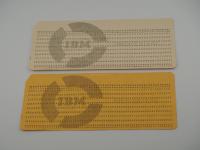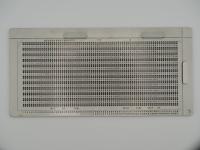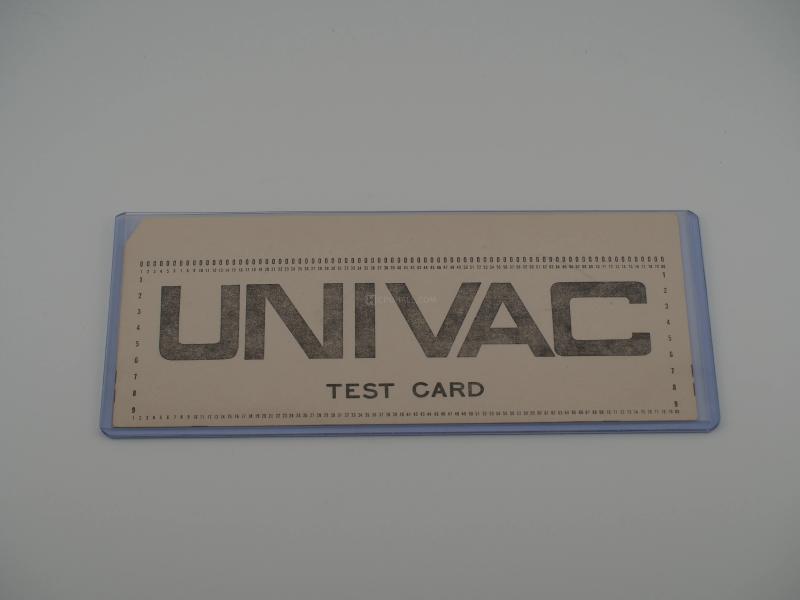

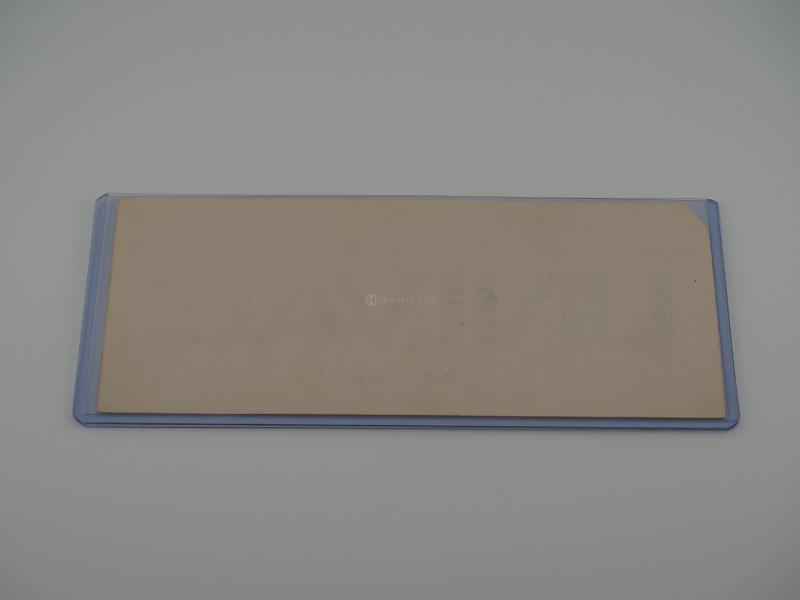
Here we have a pristine, unpunched piece of vintage computing history made entirely of paper.
Transcribed Surface Text:0 00000000000000000000... (80 columns)
1 2 3 4 5 6 ... 80 (Column indicators)
1 2 3 4 5 6 7 8 9 (Row indicators)
UNIVAC
TEST CARD
The bold UNIVAC logo is not a solid block of ink. It is composed of a dense, stippled dot pattern that almost looks porous under high magnification. The card stock is a classic manila color, and I immediately noticed the standard diagonal cut on the top left corner. This physical keying mechanism ensured that operators stacked the deck in the correct orientation before feeding it into the hopper.
It feels strange to discuss the architecture of a piece of paper, but this card represents a rigid and highly standardized data format. This is the classic 80-column Hollerith card format. It does not possess a clockspeed or transistor count, but it holds exactly 80 bytes of data.
The physical dimensions are an engineering standard unto themselves. The card measures exactly 7.375 inches wide by 3.25 inches tall, with a precise thickness of 0.007 inches. A mechanical or optical card reader would ingest these cards at high speeds, reading the rectangular holes that operators punched into the grid. The grid consists of columns numbered 1 through 80 and rows numbered 0 through 9. There are two additional unprinted rows at the top (rows 12 and 11) which allowed for alphanumeric character encoding through combinations of overpunches. Without the precise rigidity and thickness of this paper, the high-speed sorting machines would constantly jam.
The name UNIVAC carries an almost mythical weight in the realm of computing history.
Eckert and Mauchly, the brilliant minds behind the ENIAC, founded the company that eventually produced the Universal Automatic Computer. They famously utilized an early UNIVAC system to predict the landslide victory of Dwight D. Eisenhower in the 1952 United States presidential election on live television.
The lore surrounding this specific card format involves a massive industry rivalry. UNIVAC initially pioneered the use of metallic magnetic tape for data storage, viewing paper punch cards as archaic. However, IBM completely dominated the business landscape with their proprietary 80-column rectangular-hole punch cards. The sheer ubiquity of the IBM format meant that UNIVAC ultimately had to bend to the market. They produced card-to-tape converters and native card readers that supported this exact format. This card is a physical testament to a time when giant corporations fought over the dimensional standards of office paper.
Finding a completely blank, unpunched test card from the UNIVAC era is a rare treat. Most surviving punch cards are either generic blank stock without prominent branding or heavily used program decks filled with code.
Given the massive "TEST CARD" designation spanning the bottom half of the artifact, I strongly believe field engineers used this specific stock for machine calibration. When servicing a UNIVAC Uniservo mechanism or a high-speed card reader, technicians needed perfectly cut, unwarped cards to test the optical alignment, mechanical feed tolerances, and stacker timing. The absence of timing marks along the bottom edge suggests that technicians used this card for static alignment checks or mechanical hopper diagnostics rather than high-speed data validation. It is a humble piece of diagnostic equipment from the dawn of the mainframe era.