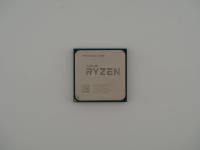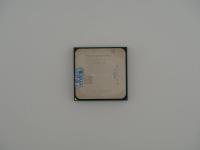

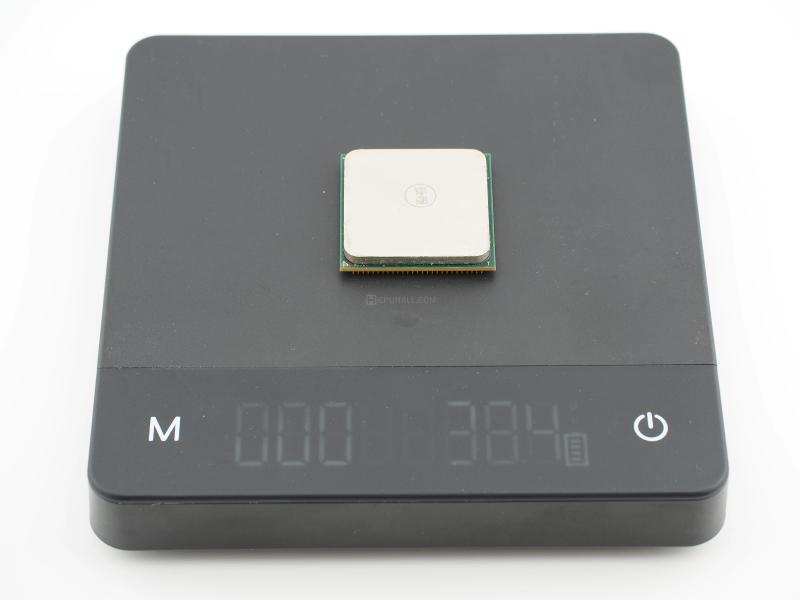
Tipping the scales at exactly 38.4 grams, this is a hefty chunk of copper, nickel, and silicon. The organic green substrate is classic late-2000s AMD, completely populated on the underside by the dense forest of 938 gold-plated pins that define the AM3 interface.
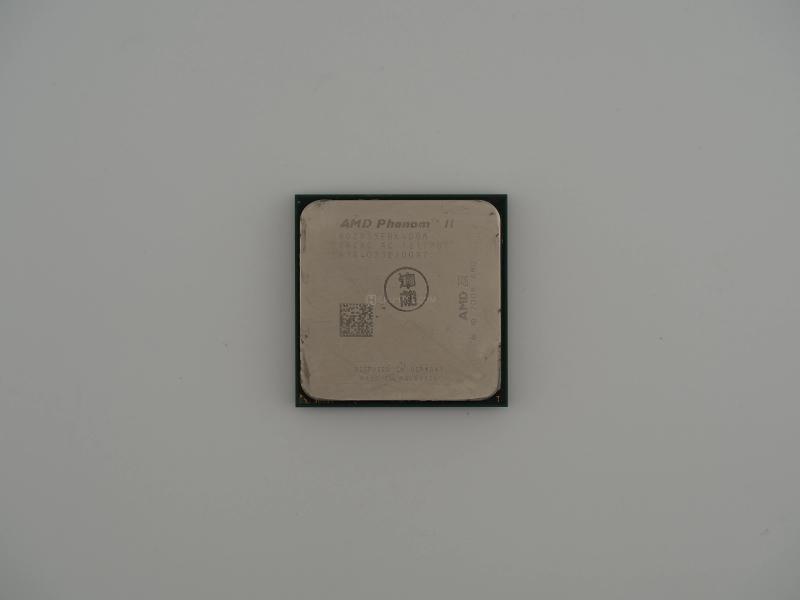
Slapped over the factory text is a black Chinese ink stamp. This is a classic hallmark of the Asian secondary hardware market, usually applied by bulk distributors or internet cafe liquidators to mark tested, "known good" inventory.
Here is the exact transcription of the surface laser etching:
AMD Phenom™ II
HDZ955FBK4DGM
CACAC AC 1217PGT
9A84031E20097

[Chinese Distributor Ink Stamp]
AMD (Logo) (C) 2008 AMD

DIFFUSED IN GERMANY
MADE IN MALAYSIA
This piece represents the absolute peak of AMD's 45nm Silicon-on-Insulator (SOI) process. Fabricated by GlobalFoundries in Dresden, Germany, the "Deneb" core was an architectural brute-force solution to Intel's Core 2 Quad.
The engineering marvel of this specific silicon lies in its memory controller. AMD engineered the AM3 physical package to be backward compatible. Because the internal memory controller supported both DDR2 and DDR3, you could drop this exact chip into an older AM2+ motherboard to ride out your old memory, or slot it into a new AM3 board to take advantage of faster DDR3 bandwidth.
Under the nickel-plated copper heat spreader sits a massive die for the era, packing roughly 758 million transistors. The chip features a massive 6MB unified L3 cache, which was the secret sauce that gave Deneb its gaming performance. It also ran hot. The "FB" in the part number dictates a 125W Thermal Design Power (TDP), meaning it required serious aftermarket air cooling to keep the core temperatures manageable under heavy load.
You cannot talk about the Phenom II without talking about the disaster that preceded it. The original Phenom architecture was crippled by low clock speeds and the infamous TLB (Translation Lookaside Buffer) erratum, a silicon bug that forced a massive performance penalty just to keep the systems stable. AMD was bleeding heavily, and Intel's Nehalem architecture was dominating the high end.
The Phenom II was AMD's apology letter to the enthusiast community. And the 955 Black Edition was the tip of the spear.
The "Black Edition" moniker meant the core clock multiplier was completely unlocked. AMD actively encouraged buyers to overclock this chip. In the late 2000s, this processor became the undisputed king of budget PC gaming. It could not beat Intel's highest-end Core i7 chips in raw benchmarks, but it offered 90 percent of the performance for half the price. Overclockers pushed these chips relentlessly, often hitting 4.0 GHz on custom water cooling loops, making it an absolute legend in the forum communities of the era.
Identifying this exact piece is highly satisfying because the laser etching tells a very specific, slightly ironic story about AMD's timeline.
Breaking down the first line HDZ955FBK4DGM:
That GM at the end is crucial. The original 955 Black Editions used the GI (Revision C2) stepping, which struggled to cross the 3.8 GHz overclocking barrier and had minor memory controller quirks. The C3 stepping fixed those issues, making this the highly desirable, refined version of the silicon.
But the real story is in the date code: 1217PGT. This means this specific piece of silicon was packaged in Week 17 of the year 2012.
This is fascinating because AMD launched the Phenom II in 2009. By 2012, AMD had already released their highly anticipated "Bulldozer" FX-series processors. However, Bulldozer was a catastrophic failure in single-threaded performance. Because the new chips were so disappointing, gamers and system builders actively ignored the new FX processors and kept buying older Phenom II chips instead. This unit, minted in late April 2012, is physical proof that AMD had to keep manufacturing their three-year-old architecture to satisfy market demand because their brand new flagship was uncompetitive. Add the Chinese distributor stamp, and it is clear this chip had a long, hard-working life powering gaming rigs long past its expected retirement date.