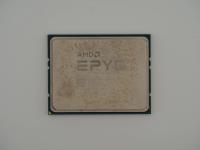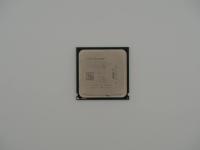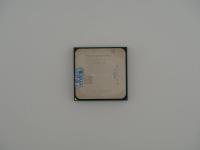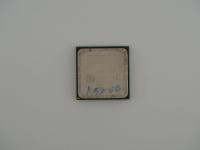

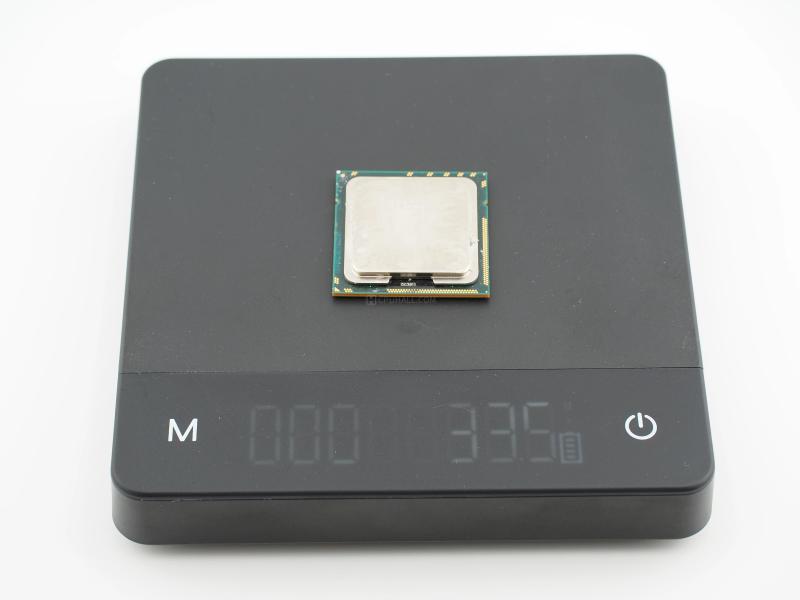
When I drop this dense piece of server history onto the scale, it registers a very solid 33.5 grams.
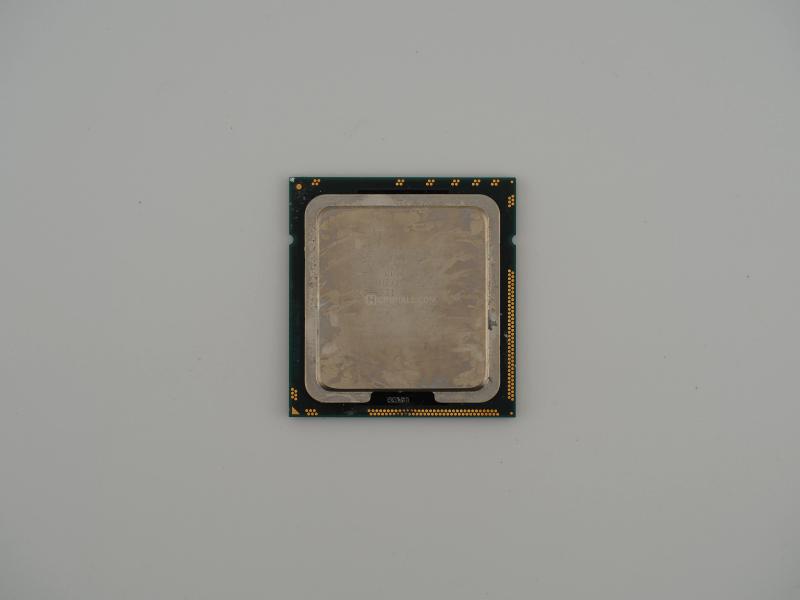
Tilting the chip under direct light allows the faint laser etching to pop against the dull, oxidized nickel plating. Here is the exact transcription of the surface text:
INTEL (M) (C) '09 X5670
INTEL (R) XEON (R)
SLBV7 COSTA RICA
2.93GHZ / 12M / 6.40
3119B231 (e4)
Flipping the processor over reveals the gold contact pads of the LGA-1366 package. Right in the center, nestled among the delicate surface-mounted capacitors, is a beautifully out-of-place artifact: a bright blue and white paper warranty sticker reading "撕毁无效 2025 11 12" alongside an "FH" logo. This translates directly to "Void if torn," indicating an aftermarket warranty expiring in November 2025. This single scrap of paper completely recontextualizes the piece. It is not just retired server hardware; it is recycled e-waste that found a second life in the overseas enthusiast market.
Diving into the engineering, the Xeon X5670 is a masterful piece of silicon from Intel's Westmere-EP family. Released in early 2010, this architecture represented Intel's "tick" in their development cycle, shrinking the highly successful Nehalem architecture down to a 32-nanometer fabrication node.
This die shrink was critical. It allowed Intel to pack six physical cores and twelve threads onto a single piece of silicon while maintaining a highly manageable 95W Thermal Design Power (TDP). Previous generation quad-cores ran hotter and consumed more power. The X5670 features a massive 12MB of L3 cache shared across all cores, keeping data incredibly close to the execution units.
The communication bus is equally impressive for its era. The 6.40 etched on the heat spreader refers to the QuickPath Interconnect (QPI) speed of 6.40 GT/s. This high-speed, point-to-point link replaced the aging Front Side Bus, allowing multiple processors in a dual-socket server board to talk to each other and the system memory with exceptionally low latency. Combined with support for triple-channel DDR3 ECC memory, this chip was designed to chew through massive databases and virtual machines without breaking a sweat.
The story of the X5670 is a tale of two entirely different lives. Initially, these chips cost well over a thousand dollars and lived their lives in absolute darkness. They were slotted into rack-mount servers in freezing, deafeningly loud datacenters, crunching enterprise workloads 24/7 for financial institutions and tech giants.
But the true lore of the X5670 begins when those servers were decommissioned. Around 2015, the market was flooded with pulled LGA-1366 Xeons. Gamers and hardware enthusiasts quickly realized a wonderful loophole. Intel's consumer-grade X58 chipset motherboards were physically identical in socket design to the server boards. Budget builders realized they could buy a used X5670 for around $20, drop it into an aging X58 motherboard, and overclock it to the absolute moon.
Because the 32nm process was so refined, an X5670 could easily be pushed from its base 2.93 GHz clock up to 4.2 GHz or even 4.5 GHz on air cooling. Overnight, this obsolete server processor became the ultimate budget gaming CPU, capable of matching modern quad-cores in gaming and absolutely destroying them in multi-threaded workloads. It is one of the most legendary "zombie" platforms in PC building history.
Reading the forensic clues on this specific silicon tells a clear story. The COSTA RICA etching confirms the assembly and testing location. The batch code 3119B231 breaks down beautifully. The 3 indicates the specific plant in Costa Rica. The 119 tells us this chip was manufactured in the 19th week of the year 2011. This means our artifact was pressed into service roughly a year after the architecture was initially launched.
The most fascinating piece of provenance is the aftermarket sticker. The expiration date of late 2025 proves the incredible, enduring viability of this hardware. After finishing its first tour of duty in a Western datacenter, it was likely palletized, shipped to Shenzhen or another massive electronics recycling hub, stress-tested, and graded. A reseller then placed their own warranty sticker over the capacitors and sold it on a platform like AliExpress or Taobao. The fact that a vendor in the modern era is willing to guarantee a CPU manufactured in 2011 until the year 2025 is a testament to the bulletproof reliability of the Westmere-EP silicon. Holding this chip, I am looking at a true survivor.